Thứ tự nét & Thư pháp
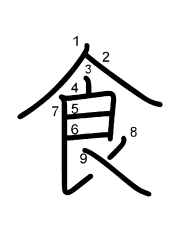
Sơ đồ thứ tự viết các nét chữ Kanji.
Biến thể Thư pháp cổ phong
Hành thư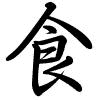
Thảo thư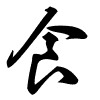
Triện thư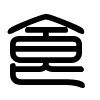
Thông số Unicode & Kỹ thuật
Unicode HexU+98DF
Unicode Decimal39135
Mã Braille (6 chấm)⠠⠻⠕
Mã Braille Kantenji⢷
Đa ngôn ngữ & Biến thể
Phiên âm Pinyin tiếng Trungshí,sì
Phiên âm Hangul tiếng Hàn사,식
Phiên âm Hán Việtthực, tự
Giản thể 食
Phồn thể 食
Phiên âm Hán Việt
thực, tự
Các ý nghĩa đầy đủeat; food; meal
Ý nghĩa chính thường dùngeat; food; meal
Cách đọc
Âm On Katakana
ショク、ジキ*
Chi tiết: ショク(漢)、ジキ(呉)、シ(漢)、ジ(呉)、イ(呉)
Thống kê tần suất dùng:ショク(83.3%), ジキ(16.7%)
Âm Kun Hiragana
く(う)、く(らう)、た(べる)
Chi tiết: く(う)、く(らう)、た(べる)、は(む)
Từ vựng & Từ ghép liên quan
Từ vựng đơn phổ biến
食べる
たべる
[ichidan verb, transitive]:
{1} to eat
{2} to live on (e.g. a salary); to live off; to subsist on
食う
くう
[godan verb, transitive]:
{1} (male language) (vulgar) to eat
{2} to live; to make a living; to survive
{3} to bite; to sting (as insects do)
{4} to tease; to torment; to taunt; to make light of; to make fun of
{5} to encroach on; to eat into; to consume
{6} to defeat a superior; to threaten a position
{7} to consume time and-or resources
{8} (colloquialism) to receive something (usu. an unfavourable event)
{9} (male language) (vulgar) to have sexual relations with a woman, esp. for the first time
食ショク
[noun]:
{1} meal; (one's) diet; food; foodstuff; foodstuffs
{2} (astronomy) eclipse (solar, lunar, etc.)
食らう
くらう
[godan verb, transitive]:
{1} (vulgar) to eat; to drink
{2} to receive (e.g. a blow)
Từ ghép Kanji
食品
しょくひん
[noun]:
commodity; foodstuff
侵食
しんしょく
[noun, する verb]:
encroachment; erosion; corrosion
食事
しょくじ
[noun]:
{1} meal
[する verb]:
{2} to eat
食用
しょくよう
[noun, の adjective]:
for use as food; edible
食料
しょくりょう
[noun]:
food
飲食店
いんしょくてん
[noun]:
restaurant; shops serving food and drink
健康食品
けんこうしょくひん
[noun, の adjective]:
health foods
夕食
ゆうしょく
[noun]:
evening meal; dinner
浸食
しんしょく
[noun, する verb]:
erosion; corrosion
食堂
しょくどう
[noun]:
{1} dining room; dining hall; cafeteria; messroom
{2} restaurant; eatery; snack bar; diner
飲食
いんしょく
[noun, する verb]:
food and drink; eating and drinking
食中毒
しょくちゅうどく
[noun]:
food poisoning
腐食
ふしょく
[noun, する verb]:
{1} corrosion
{2} saprophagy
食卓
しょくたく
[noun, の adjective]:
dining table
食糧
しょくりょう
[noun]:
food (esp. staple food such as rice or wheat); provisions; rations; food supply
Động từ ghép
食い込む
くいこむ
{1} to bite into (e.g. rope into skin); to cut into; to dig into (e.g. of fingernails)
{2} to eat into; to encroach; to make inroads; to penetrate (e.g. a market); to break into (e.g. first place); to erode; to cut into (e.g. time, savings)
{3} (vulg) to be wedged (i.e. underwear pulled from the back, driving it between the buttocks)
食い止める
くいとめる
to check; to hold back
食い違う
くいちがう
to cross each other; to run counter to; to differ; to clash; to go awry
Câu ví dụ minh họa
ハンバーガーばかり食 べていると、栄養 が偏 るよ。
Your diet is going to be really unbalanced if all you eat is hamburgers.
ここではおいしい食 べ物 が出 されます。
They serve excellent food here.
The dinner they served was badly cooked.
They have a growing population; therefore they need more and more food.
They are impatient for their lunch.
He said he would pay for the dinner.
その食品 の中 からコレラ菌 が検出 された。
Cholera germs were found in the food.
Calcium is absent from his diet.
Some kinds of food make us thirsty.
Cavities have become rarer in the developed countries and more people will be able to eat with their own teeth throughout their life.
"Is it a cupboard?" Replied Pip.