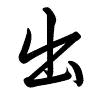
N5Tiểu học 1Tần suất: #5
Số nét5 nét
Thuộc bộ thủ
Loại chữCompound ideograph
Cấu trúc

Thứ tự nét & Thư pháp
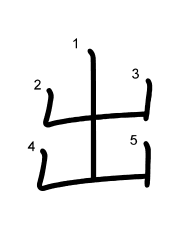
Thứ tự nét chữ 出

Sơ đồ thứ tự viết các nét chữ Kanji.
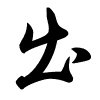
Biến thể Thư pháp cổ phong
Hành thưHành thư
Thảo thưThảo thư
Triện thưTriện thư

Thông số Unicode & Kỹ thuật

Unicode HexU+51FA
Unicode Decimal20986
Mã Braille (6 chấm)⠢⠹⠁
Mã Braille Kantenji⠱⣞

Đa ngôn ngữ & Biến thể

Phiên âm Pinyin tiếng Trungchū
Phiên âm Hangul tiếng Hàn
Phiên âm Hán Việtxuý, xuất, xích
Giản thể
Phồn thể

Phiên âm Hán Việt

xuý, xuất, xích
Các ý nghĩa đầy đủexit; leave; go out; come out; put out; protrude
Ý nghĩa chính thường dùngexit; go out; put out

Cách đọc

Âm On Katakana

シュツ、スイ*

Chi tiết: シュツ(漢)、スチ(呉)、スイ(呉)

Thống kê tần suất dùng:スイ(92.9%), シュツ(7.1%)

Âm Kun Hiragana

で(る)、だ(す)

Chi tiết: で(る)、だ(す)、い(でる)、い(だす)、い(づ)、いだ(す)

Phân tích cấu trúc & Bộ phận

Thành phần cấu tạo
Từ các bộ thủ
Là thành phần trong các chữ Kanji khác

Từ vựng & Từ ghép liên quan

Từ vựng đơn phổ biến
出る
[ichidan verb, intransitive]:
{1} to leave; to exit; to go out; to come out; to get out
{2} to leave (on a journey); to depart; to start out; to set out
{3} to move forward
{4} to come to; to get to; to lead to; to reach
{5} to appear; to come out; to emerge; to surface; to come forth; to turn up; to be found; to be detected; to be discovered; to be exposed; to show; to be exhibited; to be on display
{6} to appear (in print); to be published; to be announced; to be issued; to be listed; to come out
{7} to attend; to participate; to take part; to enter (an event); to play in; to perform
{8} to be stated; to be expressed; to come up; to be brought up; to be raised
{9} to sell
{10} to exceed; to go over
{11} to stick out; to protrude
{12} to break out; to occur; to start; to originate
{13} to be produced
{14} to come from; to be derived from
{15} to be given; to get; to receive; to be offered; to be provided; to be presented; to be submitted; to be handed in; to be turned in; to be paid
{16} to answer (phone, door, etc.); to get
{17} to assume (an attitude); to act; to behave
{18} to pick up (speed, etc.); to gain
{19} to flow (e.g. tears); to run; to bleed
{20} to graduate
出す
[godan verb, transitive]:
{1} to take out; to get out
{2} to put out; to reveal; to show
{3} to submit (e.g. thesis); to turn in
{4} to publish; to make public
{5} to send (e.g. letter)
{6} to produce (a sound); to start (fire)
{7} to serve (food)
[suffix, godan verb]:
{8} to begin ...; to start to ...; to burst into ...
シュツ
[noun]:
{1} coming out; emerging
{2} being born into (a certain family); being a native of (a particular place)
Từ ghép Kanji
出現
しゅつげん
[noun, する verb]:
appearance; arrival; make one's appearance
出場
しゅつじょう
[noun, する verb]:
{1} (stage) appearance; performance
{2} participation (e.g. in a tournament)
選出
んしゅつ
[noun, する verb]:
election
出演
しゅつえん
[noun]:
{1} performance; stage appearance
[する verb]:
{2} to act (in a play)
演出
んしゅつ
[noun, する verb]:
production (e.g. play); direction
出身
しゅっしん
[noun, の adjective]:
{1} person's origin (town, city, country, parentage, etc.)
{2} institution from which one graduated
{3} director in charge of employee relations
出版
しゅっぱん
[noun, する verb]:
publication
出口
ぐち
[noun]:
exit; gateway; way out; outlet; leak; vent
提出
いしゅつ
[する verb]:
{1} to present; to submit (e.g. a report or a thesis); to hand in; to file; to turn in
[noun]:
{2} presentation; submission; filing
出産
しゅっさん
[noun, する verb, の adjective]:
(child)birth; delivery; production (of goods)
出版社
しゅっぱんしゃ
[noun]:
publisher
出版物
しゅっぱんぶつ
[noun]:
publication
進出
んしゅつ
[noun, する verb]:
advance (into a new market or stage of progress); launching (a new career or venture); expanding (into a new market); stepping forward; emerging
出力
しゅりょく
[noun, する verb]:
output (electrical, signal, etc.)
出店
みせ
[noun, する verb]:
{1} food stand; food stall
{2} branch store
Động từ ghép
思い出す
もいだ
to recall; to remember
出会う
{1} to meet (by chance); to come across; to run across; to encounter; to happen upon
{2} to meet (e.g. of rivers, highways, etc.)
{3} to emerge and engage (an enemy)
飛び出す
びだ
{1} to jump out; to rush out; to fly out
{2} to appear (suddenly)
{3} to protrude; to project
{4} to butt in
逃げ出す
げだす
to run away; to escape from
差し出す
しだ
to present; to submit; to tender; to hold out
吐き出す
きだ
to vomit; to spit out
乗り出す
りだ
{1} to set out; to set sail
{2} to embark on (a new venture); to set out (to achieve something)
{3} to begin to ride
{4} to lean forward
持ち出す
ちだす
{1} to take out; to carry out; to bring out from where it belongs
{2} to mention something; to broach a topic; to bring up (a subject); to raise (an issue); to mention
言い出す
いだ
to start talking; to speak; to tell; to propose; to suggest; to break the ice
投げ出す
げだす
{1} to throw down; to throw out; to stretch out (one's legs)
{2} to abandon; to resign
{3} to give freely; to give generously; to sacrifice (e.g. one's life)
{4} to start to throw
追い出す
いだ
to expel; to drive out
引き出す
きだ
to pull out; to take out; to draw out; to withdraw
生み出す
みだ
{1} to create; to bring forth; to produce
{2} to invent; to think up and bring into being
{3} to give birth to; to bear
抜け出す
けだ
{1} to slip out; to sneak away; to excel
{2} (computer term) to break (out of a loop)
出向く
to go to; to proceed to; to leave for

Câu ví dụ minh họa

(かれ)らは(はや)(しゅっぱつ)することで(いけん)(いっち)した。

They agreed to start early.

Kanji trong câu
Độ khóLớp 10 (THPT)
Từ chính一致
Trợ từ
(かんこうば)には(やく)20の(でみせ)(なら)んだ。

There was a row of about 20 stalls at the fair.

Kanji trong câu
Độ khóLớp 6 (Tiểu học)
Từ chính並ぶ
Trợ từ
(かのじょ)()るとすぐに、(れっしゃ)(えき)(しゅっぱつ)した。

As soon as she got on the train, it pulled out of the station.

Kanji trong câu
Độ khóLớp 10 (THPT)
Từ chính乗る
Trợ từ
(できごと)(かれ)(よげん)したとおりに(てんかい)した。

The events unfolded just as she predicted.

Kanji trong câu
Độ khóTrên THPT
Từ chính予言
Trợ từ
(きんり)(ていか)したので(ぎんこう)()()しが(ぞうか)している。

Bank lending is rising because of lower interest rates.

Độ khóLớp 11 (THPT)
Từ chính低下
Trợ từ
(さんふじんか)()()っているのは(しゅっせい)(すう)(げんしょう)(いりょう)ニーズが(ていげん)したのを(はんえい)している。

The reduction in obstetricians and gynecologists is a reflection of the decrease in births, thus reducing need for medical care.

Độ khóLớp 11 (THPT)
Từ chính低減
Trợ từ
(さいきん)(おうしつ)ファミリーについて()された(ほん)()(さつ)(けっしゅつ)している。

Two books stand out among the dozens recently published on the Royal Family.

Độ khóLớp 10 (THPT)
Từ chính傑出
Trợ từ
ここではおいしい()(もの)()されます。

They serve excellent food here.

Kanji trong câu
Độ khóLớp 6 (Tiểu học)
Từ chính出す
Trợ từ
(けっこんしき)ではあまりにたくさんのごちそうが()されたので、(しんろう)(しんぷ)はもっと(おお)くの(ひと)()ぶべきだったかなと(おも)(はじ)めた。

Food and drink were served in such profusion at the wedding that the bride and groom began to wonder if they should have invited more guests.

Độ khóLớp 6 (Tiểu học)
Từ chính出す
Trợ từ
(かのじょ)()(しじ)はいつも(せいかく)だ。

She is exact in all the instructions she gives.

Kanji trong câu
Độ khóLớp 10 (THPT)
Từ chính出す
Trợ từ
(かれ)らが()した(しょくじ)はまずかった。

The dinner they served was badly cooked.

Kanji trong câu
Độ khóLớp 10 (THPT)
Từ chính出す
Trợ từ
(にほん)()きの(ひよう)(だいがく)()してくれた。

The university paid my way to Japan.

Kanji trong câu
Độ khóLớp 7 (THCS)
Từ chính出す
Trợ từ
(かのじょ)たちの(くち)から(しょくば)(ろうどう)(もんだい)()てくることはほとんどなかった。

They rarely spoke of the labour problem at their workplace.

Độ khóTrên THPT
Từ chính出る
Trợ từ
(もぎ)(しけん)(なん)(かい)(しっぱい)して、(じっさい)()けてみたら(おも)わぬ(けっか)()た。

Having failed my mock examinations any number of times, when I actually tried taking it the result was nothing I'd imagined.

Độ khóLớp 7 (THCS)
Từ chính出る
Trợ từ
Media playerで(おんがく)()こうとしてもエラーが()てファイルを(さいせい)できません。

When I try to listen to music with media player there's an error and I can't play the file.

Kanji trong câu
Độ khóLớp 8 (THCS)
Từ chính出る
Trợ từ