N3Tiểu học 4Tần suất: #273
Số nét10 nét
Thuộc bộ thủ
Loại chữCompound ideograph
Cấu trúc

Thứ tự nét & Thư pháp

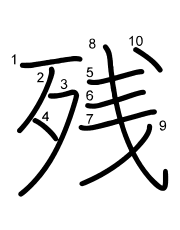
Thứ tự nét chữ 残

Sơ đồ thứ tự viết các nét chữ Kanji.

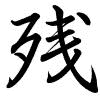
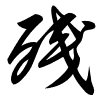
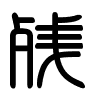
Biến thể Thư pháp cổ phong
Hành thưHành thư
Thảo thưThảo thư
Triện thưTriện thư

Thông số Unicode & Kỹ thuật

Unicode HexU+6B8B
Unicode Decimal27531
Mã Braille (6 chấm)⠸⠢⠎
Mã Braille Kantenji⣕⣬

Đa ngôn ngữ & Biến thể

Phiên âm Pinyin tiếng Trungcán
Phiên âm Hangul tiếng Hàn
Phiên âm Hán Việttàn
Giản thể
Phồn thể

Phiên âm Hán Việt

tàn
Các ý nghĩa đầy đủremainder; leftover; balance; remain; ruthless
Ý nghĩa chính thường dùngremainder; remain; ruthless

Cách đọc

Âm On Katakana

ザン

Chi tiết: ザン(呉)、サン(漢)

Thống kê tần suất dùng:ザン(100%)

Âm Kun Hiragana

のこ(る)、のこ(す)

Chi tiết: のこ(る)、のこ(す)、そこな(う)、のこ(り)、そこ(なう)

Phân tích cấu trúc & Bộ phận

Thành phần cấu tạo
Từ các chữ Kanji khác
Từ các bộ thủ

Từ vựng & Từ ghép liên quan

Từ vựng đơn phổ biến
残る
[godan verb, intransitive]:
to remain; to be left
残す
[godan verb, transitive]:
to leave (behind, over); to bequeath; to save; to reserve
残り
こり
[noun, の adjective]:
remnant; residue; remaining; left-over
ザン
[noun, prefix]:
remaining; left-over; excess
Từ ghép Kanji
残留
んりゅう
[noun, する verb, の adjective]:
{1} residual; residue
{2} stay behind; stay back
名残
ごり
[noun]:
{1} remains; traces; vestiges; relics
{2} (the sorrow of) parting
{3} end
残存
んそん
[noun, する verb]:
remaining; survival; residue; residual
残念
んね
[な adjective, noun]:
deplorable; bad luck; regret; disappointment
残酷
んこく
[な adjective, noun]:
cruelty; harshness
残虐
んぎゃく
[な adjective, noun]:
cruelty; brutality
残忍
んにん
[な adjective, noun]:
cruelty; atrocity; brutality
残業
んぎょう
[noun, する verb]:
overtime (work)
Động từ ghép
生き残る
きのこ
to survive

Câu ví dụ minh họa

(ふね)(ちんぼつ)してしまってのち、(ふね)(ざんがい)()()げられた。

The wreckage of the ship was salvaged after it had gone to Davy Jones's locker.

Kanji trong câu
Độ khóLớp 12 (THPT)
Từ chính引き上げる
Trợ từ
(すいとう)にはほとんど(みず)(のこ)っていない。

There is little water left in the canteen.

Kanji trong câu
Độ khóTrên THPT
Từ chính残る
Trợ từ
(こうずい)のあとに(ねんど)(そう)(のこ)った。

The flood deposited a layer of mud.

Kanji trong câu
Độ khóLớp 6 (Tiểu học)
Từ chính残る
Trợ từ
(げんきん)()れの(はこ)にはほとんどお(かね)(のこ)っていないことがわかった。

We found there was scarcely any money left in the cash-box.

Kanji trong câu
Độ khóLớp 9 (THCS)
Từ chính残る
Trợ từ
たくさんの(ざんぱん)(のこ)っていた。

Lots of leftovers remained inside.

Kanji trong câu
Độ khóLớp 5 (Tiểu học)
Từ chính残る
Trợ từ
(ろじょう)には(ゆき)のかたまりが(のこ)っている。

There are lumps of snow lying on the road.

Kanji trong câu
Độ khóLớp 5 (Tiểu học)
Từ chính残る
Trợ từ
(ふね)(ちんぼつ)してしまってのち、(ふね)(ざんがい)()()げられた。

The wreckage of the ship was salvaged after it had gone to Davy Jones's locker.

Kanji trong câu
Độ khóLớp 12 (THPT)
Từ chính沈没
Trợ từ
(かれ)()(のこ)ったということは(ちゅうもく)することだ。

That he survived was remarkable.

Kanji trong câu
Độ khóTrên THPT
Từ chính生き残る
Trợ từ
(かく)(せんそう)(のち)(だれ)()(のこ)ることができようか。

Who can survive after a nuclear war?

Kanji trong câu
Độ khóLớp 8 (THCS)
Từ chính生き残る
Trợ từ
98(にん)(じょうきゃく)のうち3(にん)だけが()(のこ)った。

Only 3 out of the 98 passengers survived.

Kanji trong câu
Độ khóLớp 10 (THPT)
Từ chính生き残る
Trợ từ
(もっと)(ちから)(つよ)(たね)や、(もっと)(ちのう)(たか)(たね)()(のこ)るのではなく、(へんか)(もっと)()(てきおう)できる(たね)()(のこ)るのです。

It is not the strongest of the species that survive, not the most intelligent, but the one most responsive to change.

Độ khóTrên THPT
Từ chính生き残る
Trợ từ
(てんねん)(しぜん)()らされていくのは(ざんねん)なことだ。

It's a shame the way natural resources are wasted.

Kanji trong câu
Độ khóLớp 10 (THPT)
Từ chính荒らす
Trợ từ
その(ざんこく)(おとこ)(いぬ)をムチで()った。

The cruel man beat the dog with a whip.

Kanji trong câu
Độ khóLớp 5 (Tiểu học)
Từ chính打つ
Trợ từ
(けがわ)のコートのために(どうぶつ)(わな)(ほかく)するのは(ざんこく)なことだ。

I think it is cruel to trap animals for fur coats.

Độ khóLớp 5 (Tiểu học)
Từ chính捕獲
Trợ từ
アテネへ()かう(いっせき)(かもつ)(せん)(なに)(こんせき)(のこ)さずに(ちちゅうかい)(ちんぼつ)した。

A cargo vessel, bound for Athens, sank in the Mediterranean without a trace.

Độ khóLớp 10 (THPT)
Từ chính沈没
Trợ từ