N3Tiểu học 3Tần suất: #172
Số nét13 nét
Thuộc bộ thủ
Loại chữCompound ideograph
Cấu trúc

Thứ tự nét & Thư pháp

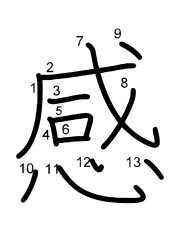
Thứ tự nét chữ 感

Sơ đồ thứ tự viết các nét chữ Kanji.

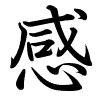
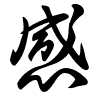
Biến thể Thư pháp cổ phong
Hành thưHành thư
Thảo thưThảo thư
Triện thưTriện thư

Thông số Unicode & Kỹ thuật

Unicode HexU+611F
Unicode Decimal24863
Mã Braille (6 chấm)⠸⠡⠪
Mã Braille Kantenji⣇⢬

Đa ngôn ngữ & Biến thể

Phiên âm Pinyin tiếng Trunggǎn
Phiên âm Hangul tiếng Hàn
Phiên âm Hán Việtcảm, hám
Giản thể
Phồn thể

Phiên âm Hán Việt

cảm, hám
Các ý nghĩa đầy đủemotion; feeling; sensation; sense; feel
Ý nghĩa chính thường dùngemotion; sense; feel; feeling

Cách đọc

Âm On Katakana

カン

Chi tiết: カン(漢)、コン(呉)

Thống kê tần suất dùng:カン(100%)

Âm Kun Hiragana

None

Phân tích cấu trúc & Bộ phận

Thành phần cấu tạo
Từ các chữ Kanji khác
Từ các bộ thủ
Là thành phần trong các chữ Kanji khác

Các chữ dễ nhầm lẫn

Các chữ Kanji có cấu trúc hoặc nét viết tương tự:

Từ vựng & Từ ghép liên quan

Từ vựng đơn phổ biến
感じる
んじる
[ichidan verb, transitive, intransitive]:
to feel; to sense; to experience
カン
[noun, noun used as a suffix]:
feeling; sensation; emotion; admiration; impression
感ずる
んずる
[ずる;じる verb, transitive, intransitive]:
to feel; to sense
Từ ghép Kanji
感情
んじょう
[noun, の adjective]:
emotion; feeling; feelings; sentiment
感染症
んせんしょう
[noun]:
infectious disease; infection
感染
んせん
[noun, する verb, の adjective]:
infection; contagion
感覚
んかく
[noun, する verb]:
sense; sensation; feeling; intuition
感謝
んしゃ
[な adjective, noun, する verb]:
thanks; gratitude
感動
んどう
[noun, する verb]:
being deeply moved emotionally; excitement; passion; deep emotion; impression
違和感
かん
[noun]:
{1} uncomfortable feeling; feeling out of place; sense of discomfort
{2} malaise; physical unease
感銘
んめい
[noun, する verb]:
deep impression
痛感
うかん
[noun, する verb]:
feeling keenly; fully realizing
敏感
んかん
[な adjective, noun]:
sensibility; susceptibility; sensitive (to); well attuned to
嫌悪感けんおかん
[noun]:
unpleasant feelings (e.g. hatred, disgust, revulsion, fear)
感涙
んるい
[noun]:
tears of gratitude
鈍感
んかん
[な adjective, noun]:
thickheadedness; stolidity; insensitivity
反感
んかん
[noun]:
antipathy; revolt; animosity
共感
きょうかん
[noun, する verb, の adjective]:
sympathy; empathy; response
Động từ ghép
感じ取る
んじと
to perceive; to sense; to take in; to grasp; to feel

Câu ví dụ minh họa

(うつく)しいものが(あた)えてくれる(かんどう)(すば)らしいものだったが、(わたし)にはその(かんどう)(ほじ)する(こと)も、いつまでも()(かえ)(こと)もできなかった。(せかい)(もっと)(うつく)しいものでさえも、(さいご)には(わたし)退(たいくつ)させてしまったのである。

The emotion they gave me was exquisite, but I could not preserve it, nor could I indefinitely repeat it; the most beautiful things in the world finished by boring me.

Độ khóTrên THPT
Từ chính与える
Trợ từ
コンタクトすると()(かわ)いた(かん)じになって、()(あか)くなります。

When I use contacts my eyes feel dry and become red.

Kanji trong câu
Độ khóLớp 8 (THCS)
Từ chính乾く
Trợ từ
(およ)いでいる(ひとたち)(からだ)()えて(かんかく)がなくなっていた。

The swimmers were numb with cold.

Kanji trong câu
Độ khóLớp 11 (THPT)
Từ chính冷える
Trợ từ
(かのじょ)(だいろっかん)でそれが()かった。

She knew it by a sixth sense.

Kanji trong câu
Độ khóTrên THPT
Từ chính分かる
Trợ từ
(かれ)()った(のち)(かのじょ)(ふあん)(かん)(はじ)めた。

After he left, she started feeling uneasy.

Kanji trong câu
Độ khóLớp 10 (THPT)
Từ chính去る
Trợ từ
(かれ)からの(おも)いがけないプレゼントが(とど)いたよ。(しょうしょう)宿(いっしゅくいっぱん)(おんぎ)でも(かん)じてくれたのかな。

We got an unexpected present from him. I guess he felt a little obligated after what we did for him.

Độ khóTrên THPT
Từ chính届く
Trợ từ
(さいきん)ドル(さきやす)(かん)(つよ)まっているなかで、(かわせ)(そうば)(べい)(けいざい)(しひょう)(たい)する(はんのう)はかなり(げんていてき)である。

As expectation increases that the dollar will weaken, the foreign exchange market's reaction to US economic indicators has been fairly muted.

Độ khóTrên THPT
Từ chính強まる
Trợ từ
(わたし)(かお)(つめ)たい(かぜ)()たるのを(かん)じた。

I felt a cold wind on my face.

Kanji trong câu
Độ khóLớp 6 (Tiểu học)
Từ chính当たる
Trợ từ
その(しごと)をしても(かれ)はほとんど(まんぞく)(かん)()られなかった。

That job gave him little gratification.

Kanji trong câu
Độ khóTrên THPT
Từ chính得る
Trợ từ
ノリもさる(こと)ながら、(かいじょう)(いったい)()したような(かいかん)(わす)れられない。

I got really into it, and I just can't forget the exhilaration of becoming one with the audience.

Độ khóLớp 10 (THPT)
Từ chính忘れる
Trợ từ
「トイレの便(べんざ)からエイズが(かんせん)することってあるの?」「いいえ、ありません」

"Is it possible to catch AIDS from toilet seats?" "No, it isn't."

Kanji trong câu
Độ khóLớp 8 (THCS)
Từ chính感染
Trợ từ
(だいち)()れるのが(かん)じられた。

The earth was felt to tremble.

Kanji trong câu
Độ khóLớp 9 (THCS)
Từ chính揺れる
Trợ từ
(からだ)()れられたとき(はだ)(かんかく)(きかん)(のう)(しんごう)(おく)り、エンドルフィンのような(かがく)(ぶっしつ)(ほうしゅつ)される。

When the body is touched, receptors in the skin send messages to the brain causing the release of chemicals such as endorphins.

Độ khóLớp 12 (THPT)
Từ chính放出
Trợ từ
(かれ)(きょうちゅう)(あいこくしん)()()がるのを(かん)じた。

He felt patriotism rise in his breast.

Độ khóLớp 8 (THCS)
Từ chính湧く
Trợ từ
(さき)(じかん)(いねむ)りした(ぶん)()わせて、(こんど)(しけん)はどうも(ひとすじなわ)ではいかない(かん)じが(ただよ)っている。

Taking into account the time I'd just spent napping, I'm really picking up the sense that this time's exam really won't be straight forward.

Độ khóLớp 5 (Tiểu học)
Từ chính漂う
Trợ từ