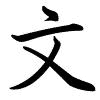
N4Tiểu học 1Tần suất: #86
Số nét4 nét
Thuộc bộ thủ
Loại chữPictograph
Cấu trúc

Thứ tự nét & Thư pháp
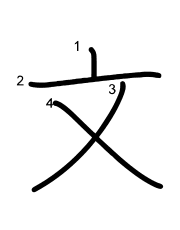
Thứ tự nét chữ 文

Sơ đồ thứ tự viết các nét chữ Kanji.
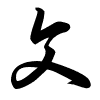
Biến thể Thư pháp cổ phong
Hành thưHành thư
Thảo thưThảo thư
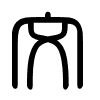
Triện thưTriện thư

Thông số Unicode & Kỹ thuật

Unicode HexU+6587
Unicode Decimal25991
Mã Braille (6 chấm)⠸⠘⠭
Mã Braille Kantenji⣁⡈

Đa ngôn ngữ & Biến thể

Phiên âm Pinyin tiếng Trungwén
Phiên âm Hangul tiếng Hàn
Phiên âm Hán Việtvăn, vấn
Giản thể
Phồn thể

Phiên âm Hán Việt

văn, vấn
Các ý nghĩa đầy đủsentence; literature; style; art; decoration; figures; plan; literary radical (no. 67); letter; writing
Ý nghĩa chính thường dùngsentence; letter; writing

Cách đọc

Âm On Katakana

ブン、モン、モ

Chi tiết: ブン(漢)、モン(呉)、モ

Thống kê tần suất dùng:モン(62.5%), ブン(37.5%)

Âm Kun Hiragana

ふみ

Chi tiết: ふみ、あや、かざ(る)

Phân tích cấu trúc & Bộ phận

Thành phần cấu tạo
Từ các chữ Kanji khác
Từ các bộ thủ

Các chữ dễ nhầm lẫn

Các chữ Kanji có cấu trúc hoặc nét viết tương tự:

Câu ví dụ minh họa

この(くに)では西(とうざい)(ぶんか)()じり()っている。

Cultures of the East and the West are mixed in this country.

Kanji trong câu
Độ khóLớp 10 (THPT)
Từ chính交じる
Trợ từ
(ぶんぽう)(じこう)としては、(げんざい)(かんりょう)(じゅどうたい)(ふく)まれています。

The grammar section includes the passive voice of the present perfect.

Độ khóLớp 12 (THPT)
Từ chính含む
Trợ từ
ロジバンでは(かいはつ)(とうしょ)より(いっかん)して(ぶんかてき)(ちゅうりつ)(たも)(こと)(こころざ)されています。

In the development of Lojban, efforts were consistently made since the initial phase to keep the language culturally neutral.

Độ khóLớp 10 (THPT)
Từ chính志す
Trợ từ
(きほんてき)(ほんやく)(くんれん)してないから(でき)ないとは()いつつ、(ただ)しい(ほんやく)よりも(れいぶん)として(しぜん)(ひょうげん)(めざ)すという(もくひょう)(かか)げられると、これはなかなか()みつきになる(たいけん)かもしれない。

Fundamentally, you're not practicing anything by translating, so even if you say that you can't do it, once you've set your sights on a similar sentence you've seen before that is more natural yet does not quite convey the original sentence's nuances, translation proves to be an act that is quite addicting.

Độ khóTrên THPT
Từ chính掲げる
Trợ từ
(ろんぶん)だなんて・・・(わたし)()いてるのは、ただの(ずいそう)、エッセイみたいなもんですよ。

Theses! ... What I write are just my ramblings, they're just something like essays.

Kanji trong câu
Độ khóLớp 3 (Tiểu học)
Từ chính書く
Trợ từ
その(ほん)(ちゅうもん)(さっとう)した。

Orders for the book poured in.

Kanji trong câu
Độ khóTrên THPT
Từ chính殺到
Trợ từ
(おお)くの(げんご)(じしょ)(がた)(ごび)()まっており、(にほんご)ではう(だん)(もじ)()わる。

In many languages the way dictionary-form words end is fixed; in Japanese they end in a 'u row' character.

Độ khóLớp 11 (THPT)
Từ chính決まる
Trợ từ
(さんにん)()れば(もんじゅ)(ちえ)って()うだろ。みんなで(かんが)えれば、いい(あん)()かぶかもしれないよ。

Let's all think on this together and we might be able to come up with some good ideas. They say two heads are better than one.

Độ khóLớp 8 (THCS)
Từ chính浮かぶ
Trợ từ
(えいご)では(おお)くの(たんご)(はつおん)しない(もじ)(ふく)んでいる。

In the English language many words contain letters which are not pronounced.

Độ khóLớp 10 (THPT)
Từ chính発音
Trợ từ
(しょうらい)、いつかコンピューターが(ぶんがく)(さくひん)(ほんやく)(ちゃくしゅ)するようになれば、われわれが()るような(ぶんがく)(さいご)(むか)えることになるだろう。

When, one day, computers undertake to translate literary works, it will be the end of literature as we know it.

Độ khóLớp 10 (THPT)
Từ chính知る
Trợ từ
(ちゅうもん)(しな)(はそん)していたとのことで、お()(もう)()げます。

We are very sorry that your order was damaged.

Kanji trong câu
Độ khóTrên THPT
Từ chính破損
Trợ từ
(しんぶん)(ことし)(ぶんがく)(さくひん)(たい)する(ろんぴょう)()っている。

A criticism of literary works this year is in the paper.

Độ khóTrên THPT
Từ chính載る
Trợ từ
(りょうこく)(かん)(ぶんか)(こうりゅう)(すす)むにしたがって、(そうごりかい)(いちだん)(ふか)まっていった。

As cultural exchange continued between the two countries, their mutual understanding became even deeper.

Độ khóLớp 11 (THPT)
Từ chính進む
Trợ từ
(りょう)(ちいき)(しゅうきょう)(ぶんか)(ちが)っている。

The two regions differ in religion and culture.

Kanji trong câu
Độ khóLớp 10 (THPT)
Từ chính違う
Trợ từ
ここで使(つか)われている(ぶんぽう)(けいしき)(みらい)(しんこう)(がた)である。

The grammatical form employed here is the present progressive.

Độ khóTrên THPT
Từ chính使う
Trợ từ