Thứ tự nét & Thư pháp
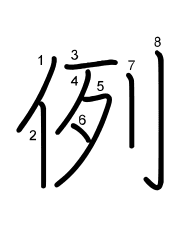
Sơ đồ thứ tự viết các nét chữ Kanji.
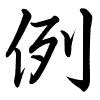
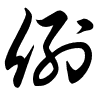
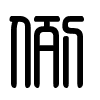
Thông số Unicode & Kỹ thuật
Đa ngôn ngữ & Biến thể
Phiên âm Hán Việt
Cách đọc
レイ
Chi tiết: レイ(漢)、レ(呉)
Thống kê tần suất dùng:レイ(100%)
たと(える)
Chi tiết: たと(える)、たぐい、ためし
Câu ví dụ minh họa
When I looked at the explanatory notes under the posts list I realized what was causing it.
Fundamentally, you're not practicing anything by translating, so even if you say that you can't do it, once you've set your sights on a similar sentence you've seen before that is more natural yet does not quite convey the original sentence's nuances, translation proves to be an act that is quite addicting.
By the way, this week - no matter what flags are set - it's a certainty that there will be no ecchi scenes. You'll just have to bear with it a while.
In particular it is customary for actual examples of use of the harmonic mean generally cover "average speed," and explain no further than that.
Truth is usually expressed in the present tense.
Somebody could exchange a sheep or a horse, for example, for anything in the marketplace that they considered to be of equal value.
Reading a book can be compared to making a journey.
Life is often compared to a voyage.
Life has often been compared to climbing a mountain.
In short some guns have excellent security systems to prevent accidental firing (e.g. when dropped), others don't.
The example is a past progressive tense sentence. How was everybody taught when they were learning about progressive tense?
The income tax rate increases in proportion as your salary rises.
A working man should be paid in proportion to his skill, not his age.
A man will succeed to the same extent as he perseveres.