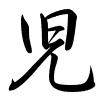
N3Tiểu học 4Tần suất: #763
Số nét7 nét
Thuộc bộ thủ
Loại chữCompound ideograph
Cấu trúc品u

Thứ tự nét & Thư pháp
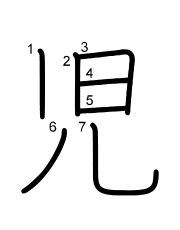
Thứ tự nét chữ 児

Sơ đồ thứ tự viết các nét chữ Kanji.

Biến thể Thư pháp cổ phong
Hành thưHành thư
Thảo thưThảo thư
Triện thưTriện thư

Thông số Unicode & Kỹ thuật

Unicode HexU+5150
Unicode Decimal20816
Mã Braille (6 chấm)⠰⠦⠧
Mã Braille Kantenji⢕⠬

Đa ngôn ngữ & Biến thể

Phiên âm Pinyin tiếng TrungN/A
Phiên âm Hangul tiếng Hàn
Phiên âm Hán Việtnhi

Phiên âm Hán Việt

nhi
Các ý nghĩa đầy đủnewborn babe; child; young of animals
Ý nghĩa chính thường dùngnewborn babe; child

Cách đọc

Âm On Katakana

ジ、ニ*

Chi tiết: ジ(漢)、ニ(呉)、ゲイ(漢)、ゲ(呉)

Thống kê tần suất dùng:ジ(81.5%), ニ(18.5%)

Âm Kun Hiragana

None

Chi tiết:

Phân tích cấu trúc & Bộ phận

Thành phần cấu tạo
Từ các chữ Kanji khác
Từ các bộ thủ

Câu ví dụ minh họa

(じょせい)(あんしん)して(はたら)くためには、(しょうがい)(しごと)(きかい)()やし、フレックスタイム、サテライトオフィス、(たくじ)(しょ)(じゅうじつ)などが(ひつよう)である。

Career opportunities, flex-time, satellite offices, and more childcare facilities are required to make women at home join the work force.

Độ khóLớp 9 (THCS)
Từ chính安心
Trợ từ
よちよち(ある)きの(ようじ)でもできるのだから(かぞく)(たの)しんでいただきたい。

Even toddlers can do it, so I'd like you to enjoy yourselves as a family.

Kanji trong câu
Độ khóLớp 8 (THCS)
Từ chính楽しむ
Trợ từ
(かれ)(ようじ)(ぎゃくたい)(ばっ)せられた。

He was punished for child abuse.

Kanji trong câu
Độ khóLớp 12 (THPT)
Từ chính罰する
Trợ từ
(いくじ)(きゅうか)(ろうじん)(かいご)のための(やす)みも、(げんざい)(にっぽん)()きている(じんこう)(こうせい)(へんどう)(たいおう)するために(ひつよう)となっているのである。

Child-care leave and time off to care for the aged are needed in order to respond to demographic changes now taking place in Japan.

Độ khóLớp 11 (THPT)
Từ chính起きる
Trợ từ
(だれ)かが(ようじ)(ゆうかい)(じけん)をおこしたと()くたびに(ぼく)(はら)がたつんだ。

Hearing about people kidnapping little children just makes my blood boil.

Độ khóLớp 10 (THPT)
Từ chính聞く
Trợ từ
(じどう)(しんり)(がくしゃ)(なか)には、(おや)はもっと(こども)(あそ)んでやり、(かんが)えさせる(もんだい)(あた)えてやるべきだ、と(かんが)える(ひと)(おお)い。

Many child psychologists think that parents should play with their children more often and give them problems to think about.

Độ khóLớp 9 (THCS)
Từ chính遊ぶ
Trợ từ
(かのじょ)はその(こじ)(どうじょう)して、お(かね)(すこ)しあげた。

She sympathized with the orphan and gave him some money.

Kanji trong câu
Độ khóLớp 11 (THPT)
Từ chính同情
Trợ từ
そして(ときおり)(わたし)(しごと)(いくじ)(りょうりつ)させようという(こころ)みにくじけそうになったとき、(わたし)(けつい)(ささ)える(たす)けになったのは(おっと)だった。

And at times when I became discouraged with trying to reconcile working and bringing up children, it was my husband who helped to maintain my determination.

Độ khóLớp 10 (THPT)
Từ chính両立
Trợ từ
(いちらんせいそうせいじ)(しゅっさん)しました。

I delivered identical twins.

Kanji trong câu
Độ khóLớp 6 (Tiểu học)
Từ chính出産
Trợ từ
(ひとびと)はその(こじ)(あわ)れんだ。

People took pity on the orphan.

Kanji trong câu
Độ khóLớp 12 (THPT)
Từ chính哀れむ
Trợ từ
あなたの(きふ)(しょうに)(びょういん)(けんせつ)する(ほじょ)として、(おお)いに(やくだ)つでしょう。

Your gift will go far towards helping to build the children's hospital.

Độ khóLớp 8 (THCS)
Từ chính建設
Trợ từ
(げんえき)退(いんたい)した(のち)、テレサは(こじ)(せわ)(いっしん)をささげた。

After retirement, Teresa devoted herself to caring for orphans.

Độ khóLớp 10 (THPT)
Từ chính引退
Trợ từ
(じょせい)(しょくば)(ちいき)(しゃかい)でますます(じゅうよう)(せきにん)(にな)うようになっているので、(いくじ)(しごと)(りょうほう)からストレスを(かん)じている(ひと)(かず)()えているといわれている。

Since women are taking on more responsibilities at work and in the community, it is said that the number of women with stress from both child-rearing and work is increasing.

Độ khóLớp 9 (THCS)
Từ chính担う
Trợ từ
(ようちえん)()たちは()をつないで(こうえん)(なか)(ある)いていた。

The kindergarten children were walking hand in hand in the park.

Kanji trong câu
Độ khóLớp 7 (THCS)
Từ chính歩く
Trợ từ
(ふうふ)(こじ)(ようじょ)にすることを(けっしん)した。

The couple decided to adopt an orphan.

Kanji trong câu
Độ khóLớp 4 (Tiểu học)
Từ chính決心
Trợ từ